Jointed swimbait
Sectional 130
$26 Sold singly · USD, delivery quoted separately
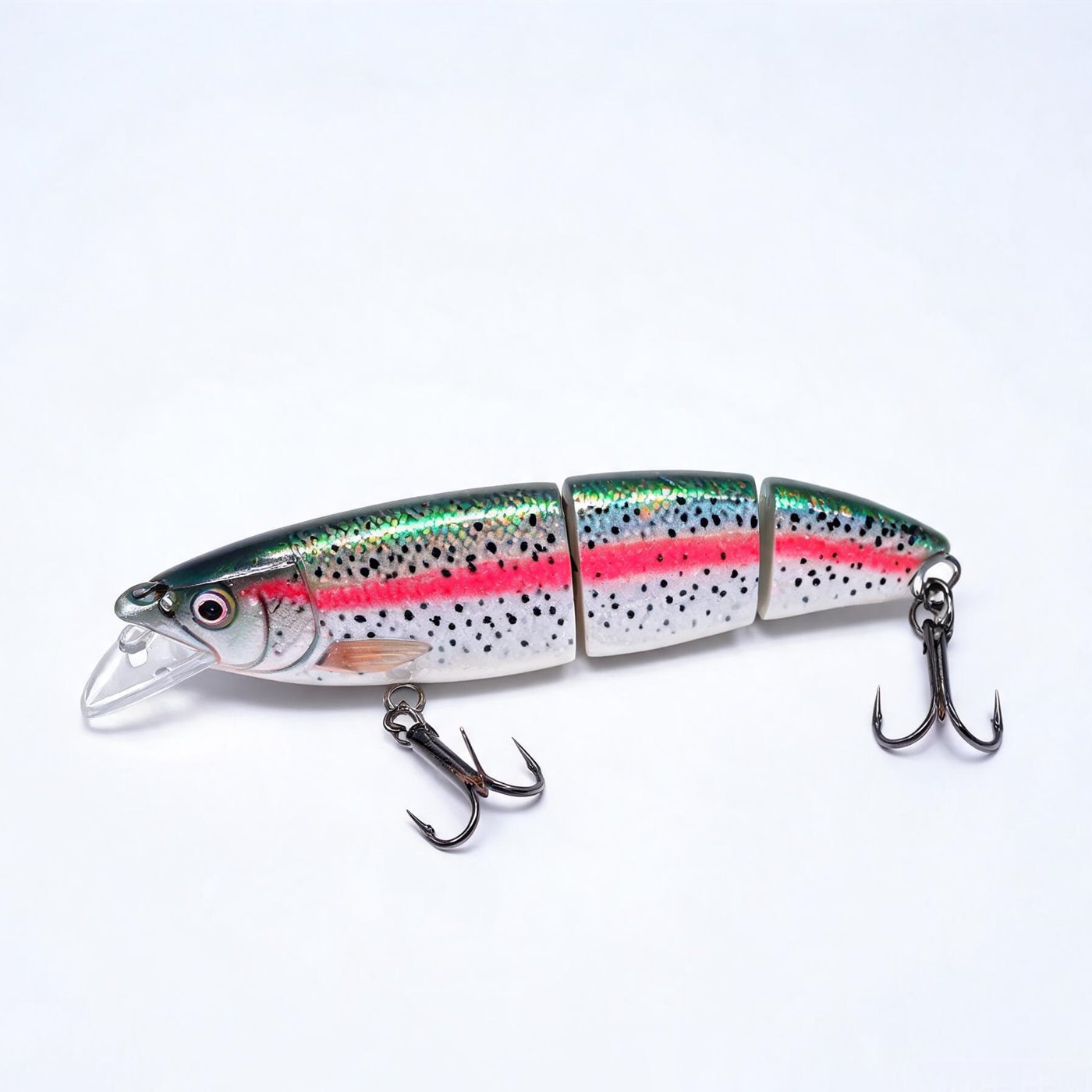
Three body sections hinged so the tail swings wide on a slow roll. The largest lure we make, for the largest fish.
Order by email — $26
Orders are placed by email and confirmed by a person. The message opens with this lure in the subject line; add how many you want and where they are going. We reply with stock, the total including delivery, and a secure payment link, within one business day. How ordering works
| Type | Jointed swimbait |
|---|---|
| Length | 130 mm |
| Weight | 26 g |
| Running depth | 0.5–1.5 m (2–5 ft) |
| Hooks | Two treble hooks |
| Sections | Three, on two hinged joints |
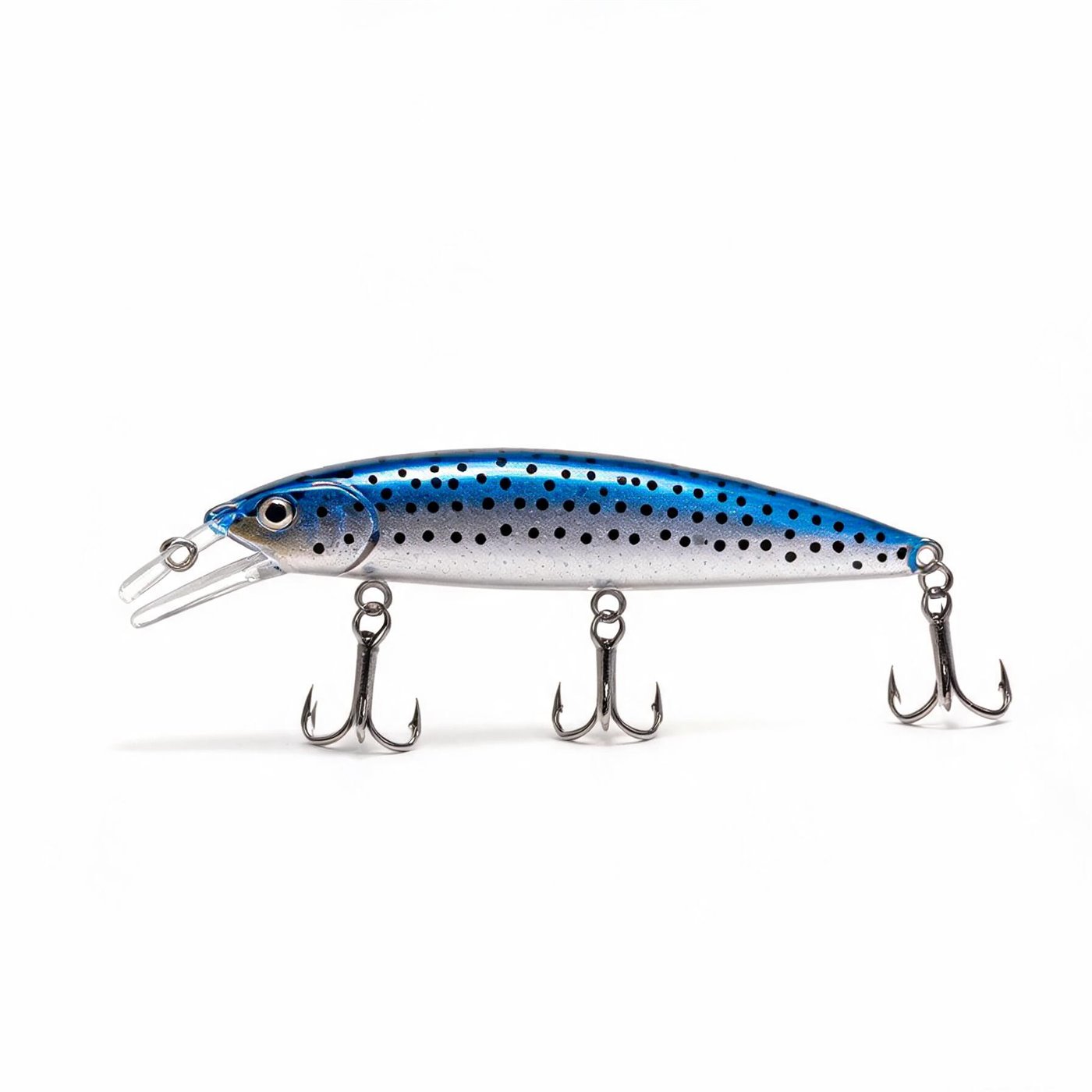
| Colour | Rainbow trout |
| Pack | Sold singly |
How to fish it
The Sectional is a jointed hard swimbait. Two hinges let the body flex into an S-shape on the retrieve, so instead of the wobble of a crankbait it gives the side-to-side swim of a real fish. At 130 mm it is the largest lure we make, and it is for fish that have learned to ignore small ones.
Slow. The single most common mistake with a swimbait is fishing it too fast. Reel just quickly enough that you can feel the tail kicking through the rod. At walking pace the joints swing wide and the lure looks like a fish going about its business; at speed it tightens up and looks like a lure.
Long casts, long retrieves. Big fish often follow a swimbait a long way before committing. Cast as far as you can and bring it all the way back to the rod tip; a surprising number of strikes come in the last few metres. If a fish follows to the boat or bank and turns away, change to a different retrieve on the next cast rather than the same one.
Add a kill. Every so often, stop reeling for a second. The lure glides and the tail settles. Fish that are following often eat on that stall. Start again with a slow turn of the handle, not a jerk.
Where and when. Points, weed edges, the outside of drop-offs, and any place big fish ambush baitfish. The lure earns its place in spring before the spawn and in autumn when fish are feeding hard on larger prey.
Colour. The rainbow trout pattern suits waters where trout are stocked or present, and reads as a generic large baitfish elsewhere: dark back, pale belly, a broken lateral line.
Pairs with
A medium-heavy or heavy rod of at least 7 feet with a moderate action, so it casts 26 g comfortably and does not rip the trebles out of a big fish at the boat. A baitcasting reel with a large spool, or a 4000-size spinning reel, and 15 to 20 lb fluorocarbon or nylon. Full detail in the rod, reel and line guide.
Care
Rinse the hinges as well as the hooks; grit in a joint stiffens the swim. Store the lure straight, not bent around other lures in the box. The two treble hooks are large and worth keeping very sharp; see the hooks guide. Many anglers swap the trebles for single hooks on big swimbaits to make release easier; the same guide covers how.
The rest of the range
All six →
Five more