Spinnerbait
Willowbind 3/8 oz
$9 Sold singly · USD, delivery quoted separately
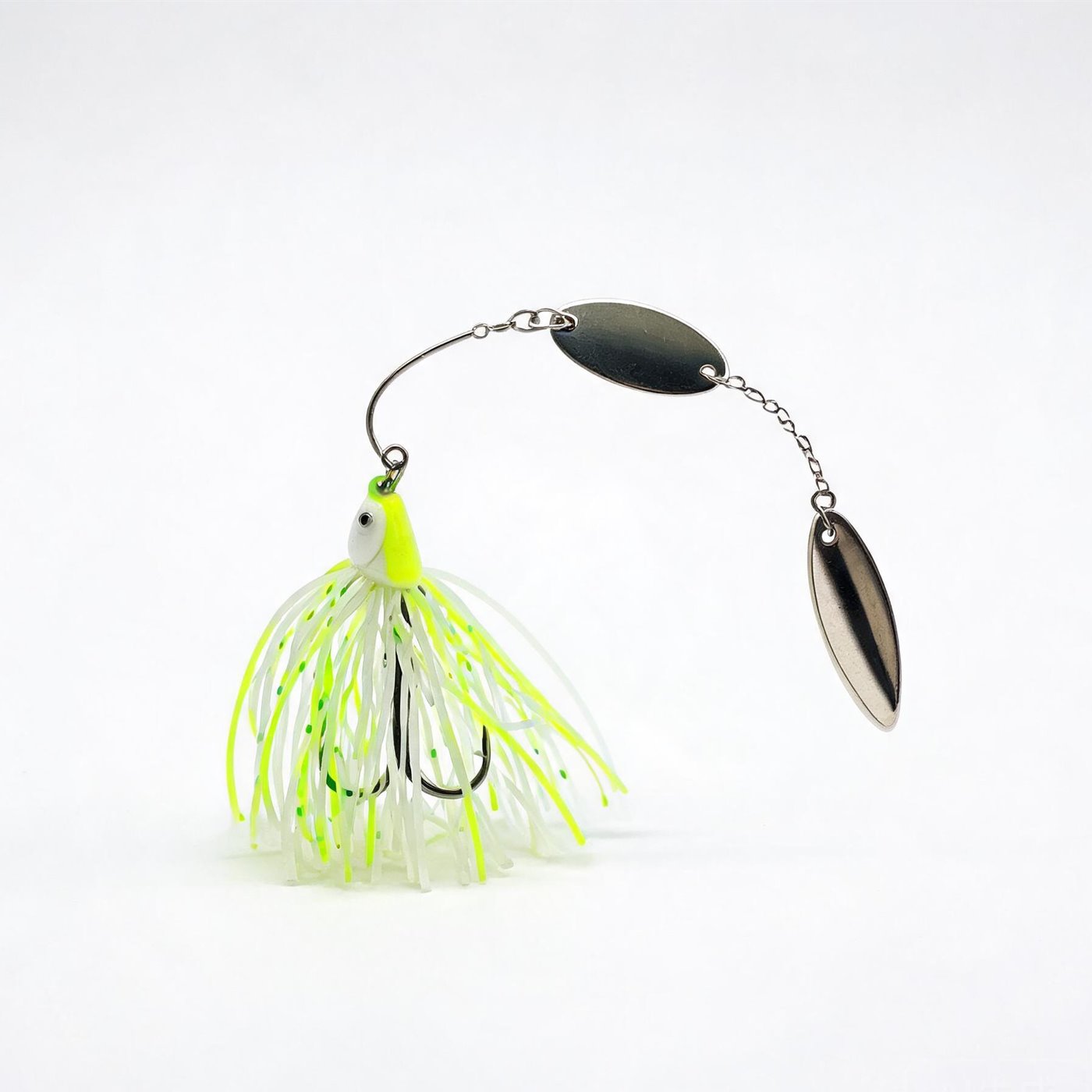
Twin willow blades on a single arm for flash without drag. Runs clean through weed edges and timber.
Order by email — $9
Orders are placed by email and confirmed by a person. The message opens with this lure in the subject line; add how many you want and where they are going. We reply with stock, the total including delivery, and a secure payment link, within one business day. How ordering works
| Type | Spinnerbait |
|---|---|
| Frame | Single-arm frame |
| Weight | 3/8 oz (10.5 g) |
| Running depth | Mid-water, retrieve-controlled |
| Hooks | Single hook |
| Blades | Two willow-leaf blades on a swivel and clevis |
| Colour | Chartreuse skirt, nickel blades |
| Pack | Sold singly |
How to fish it
A spinnerbait is a wire frame with a weighted, skirted hook on the bottom arm and spinning blades on the top. The blades give flash and vibration; the upturned single hook rides behind the wire, which slides over the things that catch trebles. It is the lure to throw into the places you would not risk a hard bait.
Willow blades want speed. The long, narrow willow-leaf blade spins fast and tight with little lift, so the Willowbind runs at a moderate to quick retrieve without rising to the surface. Reel steadily and you will feel the blades thrumming through the rod; if that thrum stops, the lure has fouled on weed and needs a sharp rip to clear it.
Bump the cover. Run it along the edge of weed, over sunken timber, past dock posts and along rip-rap. Where a crankbait would hang up, the wire arm deflects and the lure hops. That deflection, like the crankbait's, is a strike trigger.
Slow-roll when it is cold or deep. Let it sink on a tight line to the depth you want, then reel just fast enough to keep the blades turning. You will feel them tick over rather than thrum. This is the presentation for fish sitting deeper on cold, bright days.
Where and when. Stained or wind-ruffled water, where the flash and vibration help fish find the lure; and any water with cover too thick for trebles. It is most useful in spring and autumn and on windy days in summer.
Colour. Chartreuse is the stained-water standard: visible when other colours disappear. In clear water, throw it on overcast days or at dusk when the brightness is less of a liability.
Pairs with
A medium-heavy rod with enough backbone to set a single large hook, a baitcasting reel or a 3000-size spinning reel, and 12 to 17 lb fluorocarbon or nylon; braid with a leader in heavy cover. Full detail in the rod, reel and line guide.
Care
After a fish, check that the wire arm has not been bent out of line; sight down it from the line tie and straighten by hand so the blades run directly above the hook. Rinse the swivel and clevis so the blades keep turning freely, and keep the single hook point sharp; see the hooks guide. If the skirt is torn, it can be replaced with a standard skirt collar.
The rest of the range
All six →
Five more